

Artificial Intelligence (AI) is rapidly growing and is simultaneously transforming the ways an organisation can manage the workflow. From resume screening to work-related analysis, AI chatbots are increasingly used by companies. This not only makes the work faster and smarter but helps make more data-driven analysis and hence take effective decisions.
Through this guide, you will learn how AI effectively boosts the process of employee recruitment and management, advantages and disadvantages of using AI for HR, and how efficient learning of AI can ease the job.
AI in HR
AI (Artificial Intelligence) in HR is the use of machine learning to enhance, automate, and optimise human resource functions. Instead of relying upon manual process of HR related work, teams now use AI tools to make informed and more effective decisions for
- Recruitment
- Employee engagement
- Performance management
- Workforce planning
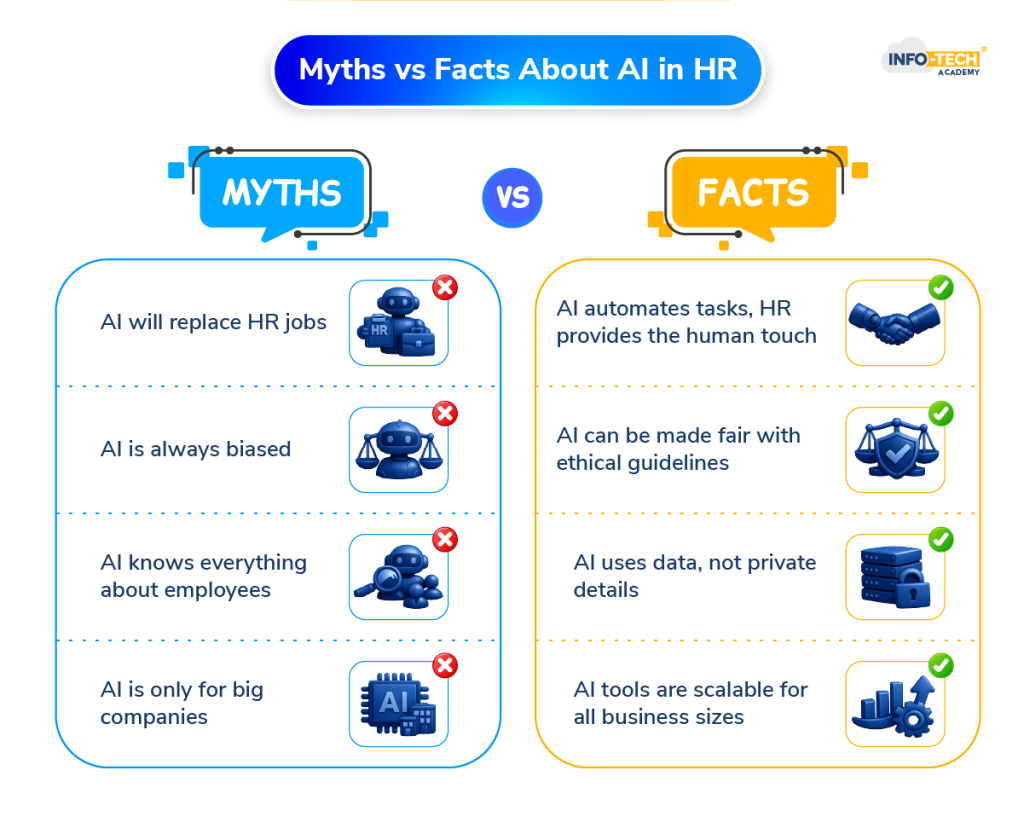
All this being said, AI is not replacing human jobs. It is only a support to HR teams for automation of tasks that are repetitive. Read about the guide to smart HR workflow to learn more.
How AI Is Transforming Recruitment
AI is shaping the recruitment process by reviewing hundreds of resumes and coordinating & scheduling meetings. Such tasks are prone to human bias and can be most time-consuming. AI does the job of streamlining and improving these tasks.
- Resume Screening
Scanning and analysing large numbers of resumes can be done within seconds by using AI systems. They help identify and filter candidates with skills and experience that align with the job requirements of employers. This can significantly reduce the amount of time recruiters spend on shortlisting the candidates who have applied.
- Smart Candidate Matching
AI systems go beyond evaluation of skills and experience by analysing the cultural fit of the candidate based on the region of work and other requirements for the role (if applicable).
- Chatbots for Initial Round of Interview
For initial level of screening through interview, AI chatbots schedule interviews and question the candidates on the frequently asked questions and then provide updates to the recruiter after analysing each candidate’s responses.
- Reduced Bias in Hiring
AI tools can minimise unconscious bias and focus mainly on relevant experience and skills. This will ensure inclusive and fair recruitment of candidates.
AI in Talent Management
AI-driven insights give data-based analysis and suggestions for modern talent management. It helps organisations in effective development, engagement, and retainment of employees.
- Performance Monitoring
Provides performance data, feedback, and tracks metrics and prepares accurate insights on the performance of each employee. This report will give feedback to the managers.
- Custom Learning and Development
Identifying skill gaps and underperformance in certain areas of work can enable AI in suggesting training programs based on the employee’s strengths, weaknesses, and goals. This can create personalised path of learning, enabling employee satisfaction, and in turn, the company’s growth.
- Effective Retention Strategies
By analysing factors such as performance trend, absenteeism, and engagement levels, AI can predict the employees who may be at the risk of leaving. This will help the HR team take action for retention and reduce the turnover cost of the company.
- Succession Planning
Identification of employees that are high performing or possess leadership traits will help in the transition of such employees as future leaders.
- Workforce Planning
Forecasting future hiring needs, identifying skill demands, and aligning with long-term business goals are possible by the use of AI powered analytics and reports.
Challenges and Limitations
Though AI offers remarkable advantages in HR, it is also important to know and address the challenges and risks that come along.
1. Data Privacy and Security Concerns
2. Risk of Algorithmic Bias
3. Over-Reliance on Technology
4. High Implementation Costs
5. Lack of AI Skills in HR Teams
Skills HR Professionals Require in the AI Era
Possessing certain skills has become a basic requirement in today’s world, as integration of AI is carried out in most of the work sectors. Staying updated to master essential AI skills will keep you competitive and relevant.
- Data Literacy and Analytical Skills
- Understanding of AI Tools
- Ethical and Responsible Usage
- Strategic Thinking and Business Acumen
- Strong Communication and Human Skills
Future of AI in Human Resources
The future of AI is focused mainly on stronger collaboration between technology and human expertise. As AI evolves, HR functions will become more personalised and aligned with business goals.
- Proactive AI will enable HR teams to take proactive actions rather than reacting after an issue arises.
- Hyper-personalised employee experience would be provided to the employees.
- AI-supported decision making would enable recruiters to take faster, accurate, and unbiased decisions while maintaining human touch.
- Focus on ethical AI, emphasising transparency, fairness, and data protection.
- Integration with technologies like automation platforms and advanced people analytics tools to enhance processes and plan workforces.
- Strategic role of HR professionals in understanding AI, data analytics, and digital transformation will be in high demand.
Learning AI for Smarter HR Management in Singapore
Learning to use AI tools effectively is no longer optional, but a great advantage. Understanding its work ability can significantly boost planning and development. In Singapore, it is important to learn skills through WSQ approved courses to take advantage of the SkillsFuture credit points provided by the Singapore government. These courses will upskill your career and reshape your professional growth. Taking up AI course for HR will equip you in a professional manner and will transform HR management by the use of Generative AI.
AI Certification for HR Frequently Asked Questions
What can AI be used for in HR?
AI in Human Resource is used for resume screening, candidate matching, performance tracking, and automating payroll and administrative tasks.
Can AI take HR jobs?
No, AI AI is unlikely to completely replace HR jobs, but it will only automate repetitive tasks.
What is ChatGPT for HR?
ChatGPT for HR is an AI-powered tool that helps HR professionals automate and improve tasks such as writing job descriptions, screening resumes, drafting emails, answering employee queries, and creating HR policies.
What skills are needed to work with AI in HR?
To work with AI, professionals need data literacy to interpret analytics and dashboards, along with a basic understanding of AI tools and recruitment technologies. They also need ethical awareness, strategic thinking, change management skills, and strong communication abilities to balance technology with human-centered HR practices.

Transforming thoughts and concepts into clear, compelling words is a powerful tool that connects people. While writing boosts my creativity, reading broadens my perspective and sharpens my understanding of language and narration.