

Digital skills have significance in Singapore because most jobs now need technology use, data handling, and digital teamwork. As AI automation, and Smart Nation projects speed up, employers expect employees to use digital tools well. Digital skills boost productivity, raise earning potential, and help professionals keep their jobs across industries.
Singapore’s job market has entered a critical digital stage. By 2023, the digital economy already had an influence on 17.7% of Singapore’s GDP, which was about SGD 113 billion, and this portion keeps growing into 2026 and beyond. What people used to think of as “technical knowledge” is now part of everyday work in all industries.
AI automation, and cloud tech are now part of everyday work making digital skills essential. Companies now expect employees in HR, finance, admin, operations, and sales—not just IT employees —to be comfortable using digital tools. In Singapore, tech jobs grew by over 23% from 2017 to 2023, and most jobs now require some digital knowledge.
Singapore’s Smart Nation program has sped up this change. By 2024 more than 94% of SMEs had started using at least one digital solution. This means employees need to know how to use these tools to keep their jobs.
Digital Skills Are No Longer “Extra” Skills
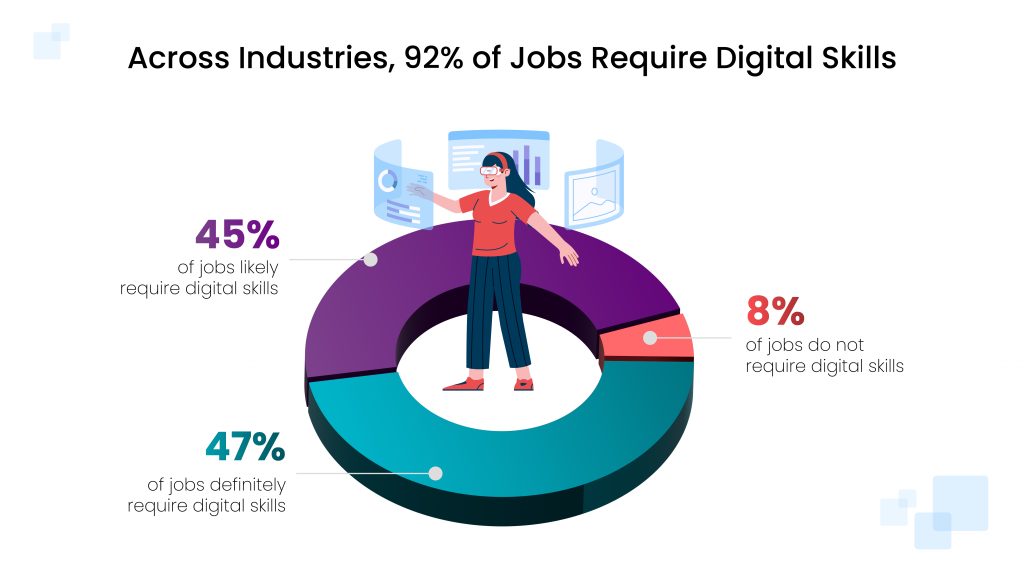
For a long time, digital skills gave people an edge. Now, in 2026, they’re essential to get hired. Research shows that over 90% of jobs need some digital know-how even in fields we didn’t think needed tech skills before.
This change comes from the need to work faster, more accuracy, and on a bigger scale. Companies are using machines for everyday tasks storing data online, and using digital tools to work together, look at information, and choose what to do. Employees who aren’t comfortable with tech often find it hard to keep up, while those who are good with digital tools have a better shot at moving up, getting better jobs, and switching careers.
Digital Skills That Are in High Demand in Singapore
“Digital skills” covers a lot, but companies want practical abilities that are ready for work, not deep tech knowledge. Skills that boost productivity and help make decisions are in high demand.
Key Digital Skills Employers Want Right Now
| Digital Skill Area | Why It Matters in 2026 |
| Data analysis & Excel | Used across HR, finance, admin, and operations for reporting and decision-making |
| AI & automation tools | Reduces manual work and improves efficiency using tools like ChatGPT and Gemini |
| Cybersecurity awareness | Essential for PDPA compliance and protecting company data |
| Cloud collaboration tools | Supports hybrid work using Zoom, Teams, Google Workspace |
| Digital marketing basics | Helps businesses reach customers online and analyse performance |
Experts who mix these abilities with their field knowledge are in high demand, as they can produce outcomes quicker with less mistakes.
How Digital Skills Boost Career Prospects
Digital skills have a clear effect on both output and earning power. SkillsFuture Singapore states that professionals with strong digital abilities earn about 17% more on average than those lacking them. Beyond pay, employees with digital skills are also more likely to be picked for leadership positions and projects across departments.
Effect of Digital Skills on Career Advancement
| Skill Gained | Workplace Impact | Career Benefit |
| Excel & data analysis | Faster reporting, fewer errors | Higher job efficiency |
| AI productivity tools | Reduced manual workload | Better performance reviews |
| Cyber awareness | Compliance and risk reduction | Trust and responsibility |
| Collaboration tools | Smooth remote teamwork | Role flexibility |
| Digital communication | Clearer messaging | Leadership readiness |
Every Job Now Needs Digital Skills
These days digital skills aren’t just for tech jobs. Most roles involve working with digital systems, data, or online platforms.
For new grads, being good with tech helps them fit in fast and catch employers’ eyes in tough job markets. People mid-career, learning new tech skills lets them move up and keep their jobs fresh. For business owners and employers, digital knowledge helps them make smarter choices automate tasks and save money.
In a nutshell digital skills have an impact on nearly everyone who deals with data, people, or systems.
Are You Keeping Pace with Singapore’s Digital Job Scene?
Singapore’s shift to digital is speeding up, not slowing down. AI tools are now part of office programs, HR systems, money platforms, and team tools. Employees who put off learning new skills might fall behind as job needs change faster than before.
The upside is that digital skills don’t take years to learn. Quick focused training—WSQ-approved courses—lets working adults gain useful skills fast and use them right away at work.
Final Takeaway
In Singapore digital skills are now essential for getting a job. As technology changes how we work, people who can use it well have a big edge. The best thing to do is begin right away—learn useful digital skills, work better, and make sure your job is safe in Singapore’s changing job market.
Start today. Check out courses on digital and Essential Office Skills Course that work with your schedule and job plans.
Frequently Asked Questions:
Why are digital skills important for non-IT jobs?
Digital tools see use in HR, finance, admin, and operations to report, automate, and work together, making digital skills key beyond IT roles.
What digital skills are most useful in Singapore?
Excel, AI tools like ChatGPT, cybersecurity awareness cloud collaboration tools, and basic data analysis are in high demand by employers.
Do digital skills really boost salary?
Yes. Professionals with digital skills make more money on average and have a better chance to get promotions and more responsibilities.
How can working adults pick up digital skills fast?
Short WSQ or SkillsFuture-backed courses offer hands-on, job-ready training without long-term study commitments.
Are digital skills future-proof?
Digital skills help professionals adjust to new tools and roles making careers more stable as technology keeps changing.

I’ve always been drawn to the power of writing! As a content writer, I love the challenge of finding the right words to capture the essence of HR, payroll, and accounting software. I enjoy breaking down complex concepts, making technical information easy to understand, and helping businesses see the real impact of the right tools.