

What Are Soft Skills?
Soft skills are traits, actions, and people skills that have an influence on how well someone works with others and handles workplace situations. Unlike job-specific or technical skills, soft skills apply across roles and industries. They shape how a person talks, teams up, tackles issues, deals with change, and builds work relationships.
In other words, these skills describe how you work, not what you do. Hard skills show if you can do a task, while the latter show how well you do it with your coworkers.
In Singapore’s skills-based economy soft skills go by the name Critical Core Skills under SkillsFuture showing how crucial they are in all sectors and job levels.
Why Are Soft Skills Important Today?
Soft skills have more importance today than ever because work has changed. Machines, AI, and online tools make it easy to learn, replace, or outsource technical skills. But human abilities like talking to others understanding feelings, leading, and thinking remain hard to automate.
Companies in Singapore and around the world now want people who can work well with others, handle quick changes, and speak when working from home or in hybrid settings. Even in jobs that need lots of technical knowledge, issues often arise from poor people skills, not a lack of technical knowledge.
Looking at job trends for 2026, companies see them as skills that help careers in the long run. These skills stay useful even as job roles change.
Soft Skills vs Hard Skills: What’s the Difference?
| Aspect | Soft Skills | Hard Skills |
| Definition | Personal traits and interpersonal abilities | Technical, job-specific skills |
| How they are learned | Through experience and behaviour | Through education and training |
| Measurability | Harder to quantify | Easy to measure and test |
| Examples | Communication, teamwork, adaptability | Coding, accounting, data analysis |
| Transferability | Highly transferable across roles | Often role or industry specific |
| Transferability | Highly transferable across roles | Often role or industry specific |
Both these skills matter a lot. But soft skills often decide who moves up, who leads, and who stays employable in the long run.
Examples of Soft Skills Employers Want
Soft skills cover many different abilities. Here are some of that today’s workplaces value most:
- Good communication
- Working well with others
- Thinking and solving problems
- Being flexible and adaptable
- Understanding emotions
- Managing time
- Leading others
- Handling disagreements
- Coming up with new ideas
- Making choices
These abilities are useful in all kinds of jobs, whether you’re in tech, finance, healthcare, teaching, or government work.
The 7 Most Common Soft Skills Explained
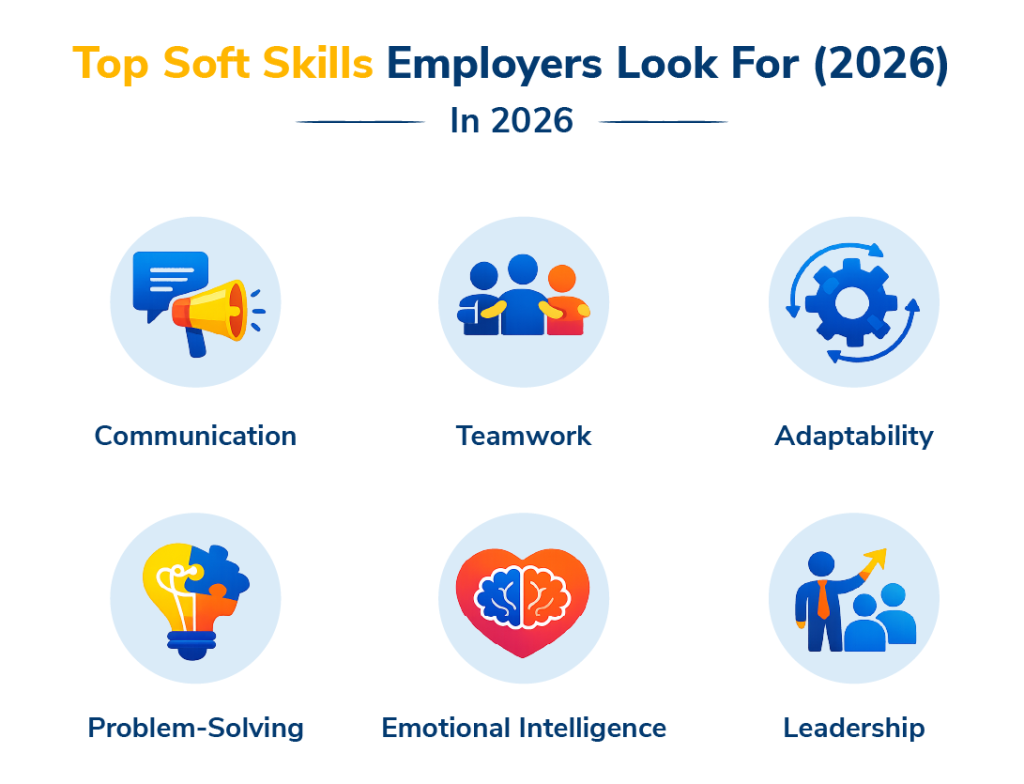
Here are seven basic skills that many people think are important:
- Communication – The skill to express ideas, listen well, and tailor messages to different groups.
- Teamwork – The ability to work well with others respect different views, and help achieve common goals.
- Problem-Solving – The capacity to spot issues, weigh options, and come up with workable answers.
- Adaptability – The knack for staying open and upbeat when things change or are unclear.
- Emotional Intelligence – The talent to grasp and control your feelings while picking up on others’ emotions.
- Time Management – The art of ranking tasks and meeting due dates without wasting time.
- Leadership – The power to sway, direct, and inspire others even without an official role.
Soft Skills in the Singapore Workplace
Singapore aligns them with the SkillsFuture Critical Core Skills framework. This framework centers on areas like communication, teamwork, flexibility, and innovative thinking. Training programs, leadership growth, and workforce improvement plans stress these skills.
Employers now look at these skills more often when they interview people, check their work, and plan who will lead next.
How to Build These Skills
You grow these skills over time by practicing and knowing yourself better. Some good ways to do this are:
- Asking coworkers and employers what they think
- Working on projects with a team
- Going to classes about leading or talking to others
- Taking time to think and always learn new things
- Watching and learning from good leaders
Unlike hard skills, these skills get better when you use them all the time in real life.
Closing Thoughts
People skills aren’t just nice-to-haves at work anymore. In today’s changing job scene, they’re key abilities that have an impact on how well you do how you get along with others, and your long-term success. Sure, knowing the technical stuff might get you in the door, but it’s your people skills that decide how far you’ll go in your career.
Frequently Asked Questions:
What are the top 5 soft skills?
Employers often seek these five skills: communication, teamwork, adaptability, problem-solving, and emotional intelligence. These skills have an impact on workplace productivity and collaboration.
What are the 10 key soft skills?
People recognize these 10 key skills: communication, teamwork, leadership, adaptability critical thinking, creativity, time management emotional intelligence, conflict resolution, and decision-making.
What are the 60 soft skills?
We can group these skills into communication, interpersonal, leadership, thinking, and self-management categories. These groups can include more than 60 skills like negotiation, empathy, resilience, persuasion, collaboration, and accountability.
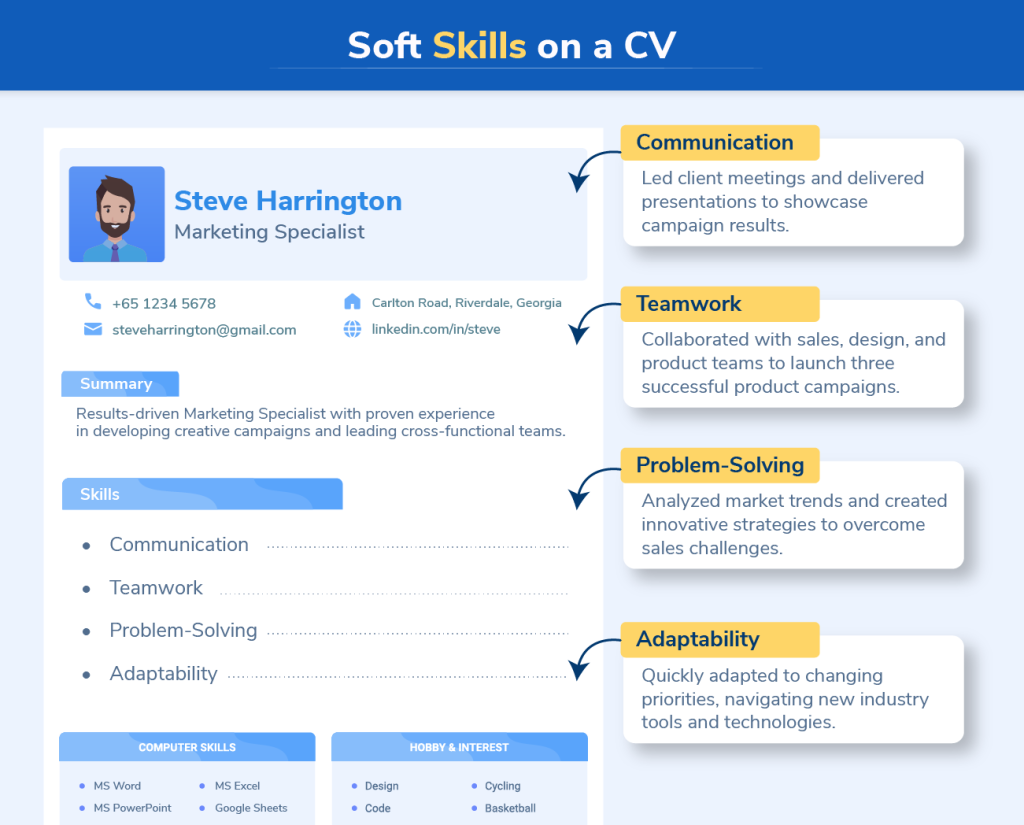
What are soft skills in a CV?
Your skills in a CV show how you interact with others and manage tasks. Examples include your ability to communicate, work in teams, lead, and adapt. You should back these up with real job experiences.

I’ve always been drawn to the power of writing! As a content writer, I love the challenge of finding the right words to capture the essence of HR, payroll, and accounting software. I enjoy breaking down complex concepts, making technical information easy to understand, and helping businesses see the real impact of the right tools.