



In this article
- 1. What Is an SLA (Service Level Agreement)?
- 2. What Does SLA (Service Level Agreement) Actually Mean?
- 3. Why Is an SLA (Service Level Agreement) Important for Businesses Today?
- 4. Is an Service Level Agreement Really Just About Legal Protection?
- 5. How Will Service Level Agreement Become More Important in the Future?
- 6. SLA (Service Level Agreement) FAQs
What Is an SLA (Service Level Agreement)?
Most people never think about an SLA until there’s a problem.
A company’s payroll system suddenly stops working before salary week. An employee reports a technical issue and waits hours for a reply that never comes. A business owner pays for “priority support” but struggles to get help during an urgent situation. That’s usually the moment people start asking:
“What exactly we promised?”
That question sits at the centre of every SLA (Service Level Agreement).
A negotiation skills course can help professionals handle these conversations more effectively and reach clearer agreements with clients, vendors and service providers.
Many companies treat SLAs like boring documents attached to contracts — something to sign quickly and forget about later. But an SLA quietly controls one of the most important parts of any business relationship: expectations.
When service expectations are unclear, even small problems can turn into major frustrations. But when expectations are properly defined, businesses operate with far less confusion, fewer disputes, and stronger trust between both sides.
What Does SLA (Service Level Agreement) Actually Mean?
An SLA (Service Level Agreement) is an agreement between a service provider and a customer that explains what level of service should be expected.
It usually outlines things like response times, issue resolution timelines, system availability, support responsibilities, and what happens if the agreed service standards are not met.
In simple terms, an SLA answers this question:
“If something goes wrong, how will it be handled?”
That may sound basic, but this is where many businesses run into trouble. People often assume everyone shares the same expectations. In reality, they rarely do.
One company may think “urgent support” means a response within 15 minutes. Another may think responding within half a day is acceptable. Without clearly defining expectations, misunderstandings become unavoidable.
An SLA exists to remove that uncertainty.
Why Is an SLA (Service Level Agreement) Important for Businesses Today?
Businesses today depend heavily on digital systems. HR teams rely on payroll software. Customer service departments depend on support systems. Employees work through cloud platforms, communication tools, and online databases every single day.
When these systems fail, work slows down almost immediately.
That’s why an Service Level Agreement is no longer just an IT-related document. It has become part of daily business operations.
A good SLA creates accountability. It ensures that everyone understands their responsibilities before problems happen — not after.
Without it, businesses often end up dealing with delayed responses, unclear responsibilities, poor communication, frustrated employees, and unresolved service disputes.
Ironically, many companies only realise the importance of an SLA after experiencing a serious operational issue themselves.
Is an Service Level Agreement Really Just About Legal Protection?
Most people assume SLAs are mainly about legal protection. In reality, they are more about trust.
Businesses want confidence that they will receive proper support when they need it most. Service providers want clear boundaries so expectations remain fair and manageable.
A strong SLA protects both sides.
It creates structure during stressful situations and prevents small problems from becoming emotional disputes. That’s especially important today, when companies rely heavily on technology to keep daily operations running smoothly.
How Will Service Level Agreement Become More Important in the Future?
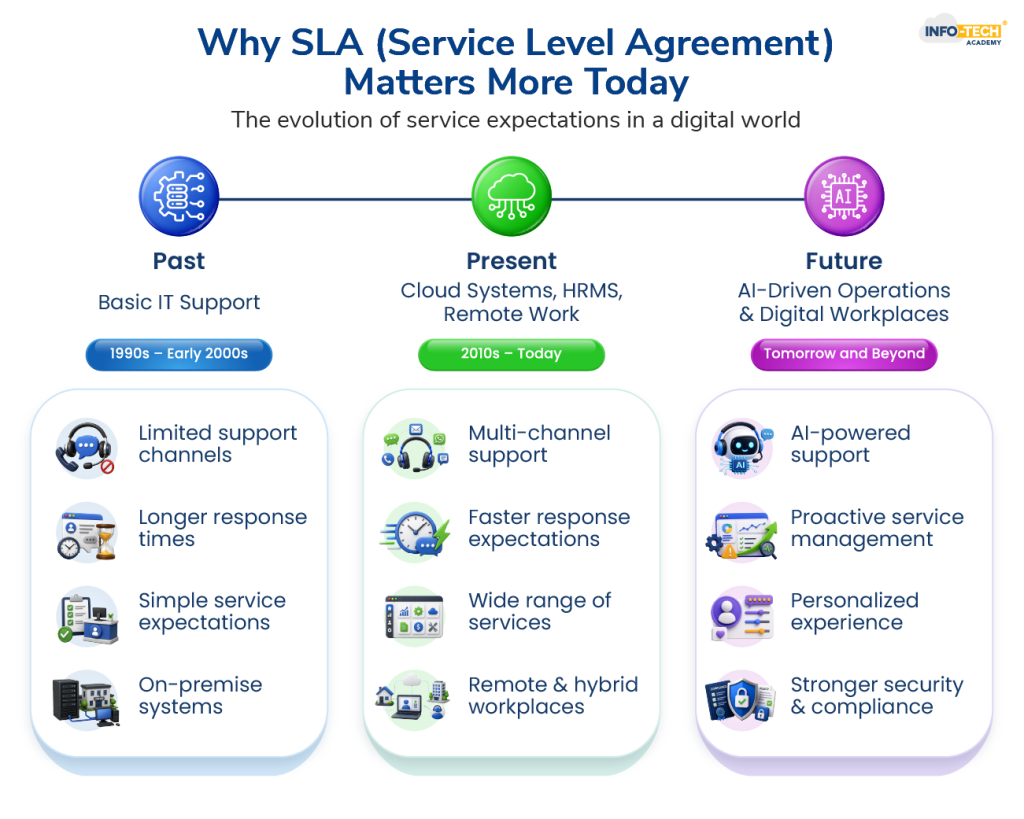
As businesses become more digital, expectations are becoming higher as well.
Customers expect faster replies. Employees expect reliable systems. Companies expect minimal downtime. Because of this, SLAs are becoming increasingly important across industries — not just in technology companies.
Businesses that take SLAs seriously usually experience fewer misunderstandings because expectations are discussed clearly from the beginning.
And honestly, that may be the real purpose behind every Service Level Agreement.
It’s not just about service performance. It’s about making sure everyone understands what reliability actually looks like before something goes wrong.
SLA (Service Level Agreement) FAQs
What is an SLA (Service Level Agreement) in simple terms?
An SLA (Service Level Agreement) is a formal agreement that explains the level of service a customer should expect from a service provider. It usually includes response times, support standards, issue resolution timelines, and responsibilities for both parties.
Why is an Service Level Agreement important?
An SLA is important because it creates clear expectations between businesses and service providers. It helps reduce misunderstandings, improves accountability, and ensures problems are handled within agreed timelines.
What happens if an SLA is not met?
If an SLA is not met, the agreement may include penalties, compensation, service credits, or escalation procedures depending on the terms agreed upon by both parties. This helps ensure service providers remain accountable.
Which industries commonly use SLA?
SLAs are widely used in industries such as IT services, cloud computing, HR management systems, payroll services, customer support, telecommunications, and software services where service reliability is important.

I’ve always been drawn to the power of writing! As a content writer, I love the challenge of finding the right words to capture the essence of HR, payroll, and accounting software. I enjoy breaking down complex concepts, making technical information easy to understand, and helping businesses see the real impact of the right tools.