



In this article
- 1. Why does language matter so much in Singapore’s workplace today?
- 2. Can learning a new language accelerate my career?
- 3. Why Language Skills Matter in Practice?
- 4. Which industries in Singapore actually value language skills the most?
- 5. The Shift Toward Practical Language Learning
- 6. Do language skills really influence leadership opportunities?
- 7. Is language learning becoming a must-have skill for the future?
- 8. Final thought
- 9. Frequently Asked Questions
Why does language matter so much in Singapore’s workplace today?
If you’ve worked in Singapore long enough, you’ll recognise this . English is the official working language, but it’s not always the language that builds trust if you’re speaking to a local.
Step into any meeting with regional clients, and you’ll notice something subtle. The moment someone switches to Mandarin, Bahasa Melayu, or even basic conversational phrases in another language, the tone changes. It becomes warmer. Less transactional.
That’s because business isn’t just about how well you present your slides, t’s about the rapport.
That’s why language skills matter here. Not as a requirement for every role, but as a practical advantage, especially in a market as regionally connected as Singapore.
Can learning a new language accelerate my career?
It can, but not in a direct or guaranteed way. Language skills don’t automatically lead to promotions. What they do is change the type of work and exposure a person gets over time.
You get included in regional meetings.
You’re trusted with clients from specific markets.
You’re seen as someone who can “handle” cross-border projects.
When two employees have similar experience, the one who can engage across languages often becomes more involved in regional or client-facing work. Over time, that exposure can influence career progression.
Why Language Skills Matter in Practice?
Anyone who has tried working across cultures will tell you this, it’s rarely about vocabulary.
You can say all the right words and still get the conversation completely wrong.
Across cultures:
- Some teams communicate very directly, others do not
- Decision-making processes can vary
- Relationship-building may come before business discussions
These are some of the differences you don’t learn from textbooks.
But when you invest time in Language Learning, you naturally start picking up these patterns. You begin to notice tone, timing, and intent.
This level of awareness sometimes referred to as cultural intelligence is especially relevant in Singapore’s multicultural and regional work environment.
Which industries in Singapore actually value language skills the most?
Some industries value language skills more visibly than others, especially when the role involves regional clients, cross-border teams, or customer-facing work.
In finance, language skills can be useful when managing clients, partners, or stakeholders across Asia. Mandarin may be helpful in some markets, but other languages can matter too depending on the client base and regional coverage.
In technology and startups, language skills become valuable when teams work across different countries. This could mean communicating with product teams, vendors, investors, or clients in markets such as China, Japan, Korea, Indonesia, Malaysia, Thailand, or Vietnam.
In hospitality, tourism, and customer service, even basic language ability can improve the customer experience. Guests often feel more comfortable when they are greeted or assisted in a language they understand, especially during service recovery or high-touch interactions.
In logistics and supply chain, language skills can help reduce misunderstandings when coordinating with regional vendors, warehouse teams, shipping partners, or overseas clients. This is especially useful when timelines, documentation, and operational details need to be clearly understood.
In HR and leadership roles, language learning is less about translation and more about cultural understanding. Leaders who can communicate across languages are often better equipped to manage diverse teams, build trust, and navigate regional working styles.
Across these industries, language skills are not always mandatory. But in Singapore’s regional business environment, they can be a practical advantage when the role involves people, markets, or operations beyond Singapore.
The Shift Toward Practical Language Learning
What kind of language learning actually works for working professionals?
Most professionals are not aiming for full fluency, and they don’t need to What matters more is practical usage:
- How to handle simple conversation
- How to respond in meetings
- How to build rapport with clients
That’s why there’s a shift happening.
Short courses, workplace-focused training, and even AI-based tools are becoming more popular in Singapore. SWDA-backed programs are also adapting to this demand.
The goal isn’t fluency anymore.
It’s usefulness.
Because in real work situations, being 60% fluent but confident is far more valuable than being 100% perfect but silent.
Do language skills really influence leadership opportunities?
This is something people usually realise a bit later in their careers.
At junior levels, technical skills matter more.
At senior levels, communication becomes everything.
If you’re managing teams across countries, language becomes a tool—not just for communication, but for alignment.
You need to:
- Read the room
- Understand unspoken concerns
- Build trust across cultures
Leaders who invest in Language Learning tend to adapt faster in these situations. They’re more flexible, more aware, and frankly, easier to work with across borders.
And in Singapore, where many leadership roles are regional, that matters a lot.
Is language learning becoming a must-have skill for the future?
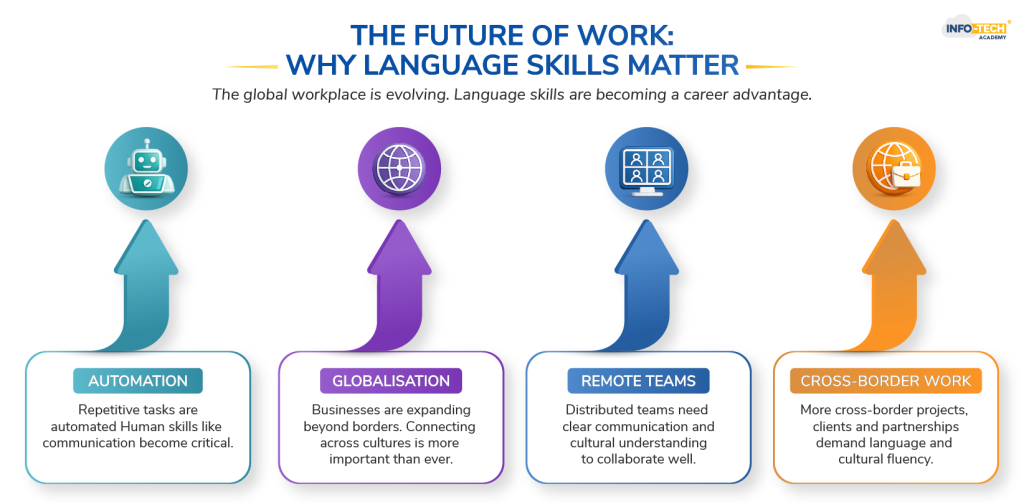
If you look at where work is heading, the answer is leaning toward yes.
Automation is taking over repetitive tasks. Technical skills are evolving quickly.
But communication—especially across cultures—is becoming more valuable, not less.
And that’s where Language Learning stands out.
It’s not just a skill on your resume.
It’s something that improves how you work, how you connect, and how you grow.
In a place like Singapore, where businesses constantly interact with the rest of Asia, that’s not going away anytime soon.
Final Thought
It’s usually not just intelligence or technical ability.
It’s how well they navigate people, conversations, and unfamiliar situations.
The professionals who move ahead are the ones who are comfortable stepping outside their default way of communicating.
That’s exactly what Language Learning helps you do.
It doesn’t just open doors—it helps you walk into rooms where you might not have been included otherwise.
And over time, those rooms make all the difference.
Language Learning FAQs
Does language learning really help career growth in Singapore?
Yes, language learning significantly improves career growth in Singapore by enhancing communication with regional clients, increasing job opportunities, and making professionals more adaptable in multicultural workplaces. Even basic proficiency can help build trust, improve collaboration, and open doors to leadership and regional roles.
Which languages are most useful to learn for jobs in Singapore?
The most useful languages for career advancement in Singapore include Mandarin for business and finance, Bahasa Indonesia for regional operations, and Japanese or Korean for tech and partnerships. The best language depends on your industry and the markets your company interacts with.
Is fluency necessary to benefit from language learning at work?
No, fluency is not required to benefit from language learning. Basic conversational skills and workplace vocabulary are often enough to build rapport, improve communication, and demonstrate cultural awareness. Practical usage matters more than perfect grammar in most professional settings.
How does language learning improve leadership opportunities?
Language learning improves leadership opportunities by helping professionals manage diverse teams, understand cultural differences, and communicate effectively across regions. Leaders with multilingual skills are often seen as more adaptable and better equipped for regional or global roles.

I’ve always been drawn to the power of writing! As a content writer, I love the challenge of finding the right words to capture the essence of HR, payroll, and accounting software. I enjoy breaking down complex concepts, making technical information easy to understand, and helping businesses see the real impact of the right tools.