


In this article
Singapore is often described as business-friendly—and it is. But that reputation sometimes hides how structured and unforgiving the compliance environment actually is. The tax rates may be competitive, and the systems efficient, but the expectations are high and very precise. In 2026, staying compliant isn’t about getting your numbers right once a year. It’s about maintaining accuracy every day. And for many professionals, the only way to keep up is by going through a practical, up-to-date Accounting Course that reflects what’s actually happening on the ground.
| In Singapore, taxation and accounting compliance in 2026 requires consistent, accurate reporting and alignment with IRAS and ACRA requirements. A practical Accounting Course helps professionals manage GST, corporate tax, and compliance risks in real-world scenarios, making it essential for both finance roles and business operations. |
The Reality of Compliance in 2026: It’s Not “Just Filing Taxes”
There’s still a tendency to treat tax as a once-a-year obligation. File it, submit it, move on.
That approach doesn’t hold up anymore.
Regulators in Singapore—especially IRAS—are working with more data than ever before. Systems are connected, filings are digital, and discrepancies are easier to spot. What used to slip through quietly now gets flagged.
In practical terms, businesses are expected to:
- Keep records clean and consistent throughout the year
- Ensure GST and corporate tax submissions match underlying data
- Be ready to explain transactions if questions come up
- Avoid last-minute corrections that raise red flags
It’s less about “filing correctly” and more about “operating correctly.”
That’s why a relevant Accounting Course today needs to go beyond theory. It has to reflect how compliance actually works in daily operations.
Why Singapore Is Raising the Bar on Accounting Skills
Singapore isn’t tightening regulations just for the sake of it. The goal is to maintain trust—as a financial hub, that’s non-negotiable.
But what’s changed is how compliance is monitored.
Instead of occasional checks, there’s now:
- More reliance on data matching across agencies
- Digital submission systems that reduce manual gaps
- Better tools to identify unusual patterns or inconsistencies
- Greater accountability placed on the people handling the numbers
This shift has quietly changed the expectations for finance roles. It’s no longer enough to understand accounting—you need to understand how your work holds up under scrutiny.
And that’s where many professionals feel the gap.
What Most Accounting Training Still Gets Wrong
A lot of accounting training still looks the same as it did years ago—focused on principles, formats, and textbook examples.
That foundation is important, but it’s not enough anymore.
In real work situations, challenges look different:
- GST isn’t always straightforward, especially across different types of transactions
- Expense classifications can affect tax outcomes
- Small errors can lead to bigger questions during reviews
- Systems and tools play a big role in how data is recorded and reported
A good Accounting Course should prepare you for these situations—not just teach you how things are supposed to work in theory.
What is the Cost of Getting Compliance Wrong
Mistakes in compliance don’t always show up immediately—but when they do, they tend to come with consequences.
For businesses, that can mean:
- Penalties or adjustments from IRAS
- More frequent checks once issues are identified
- Delays when trying to expand or secure partnerships
- Loss of confidence from stakeholders
For individuals, it can affect credibility. Being the person responsible for inaccurate reporting is not something that goes unnoticed.
That’s why more companies are paying closer attention to who handles their accounts—and whether they actually understand compliance.
What a Practical Course Should Actually Teach
Not all courses are built the same. If the goal is to handle compliance confidently, the content has to be practical.
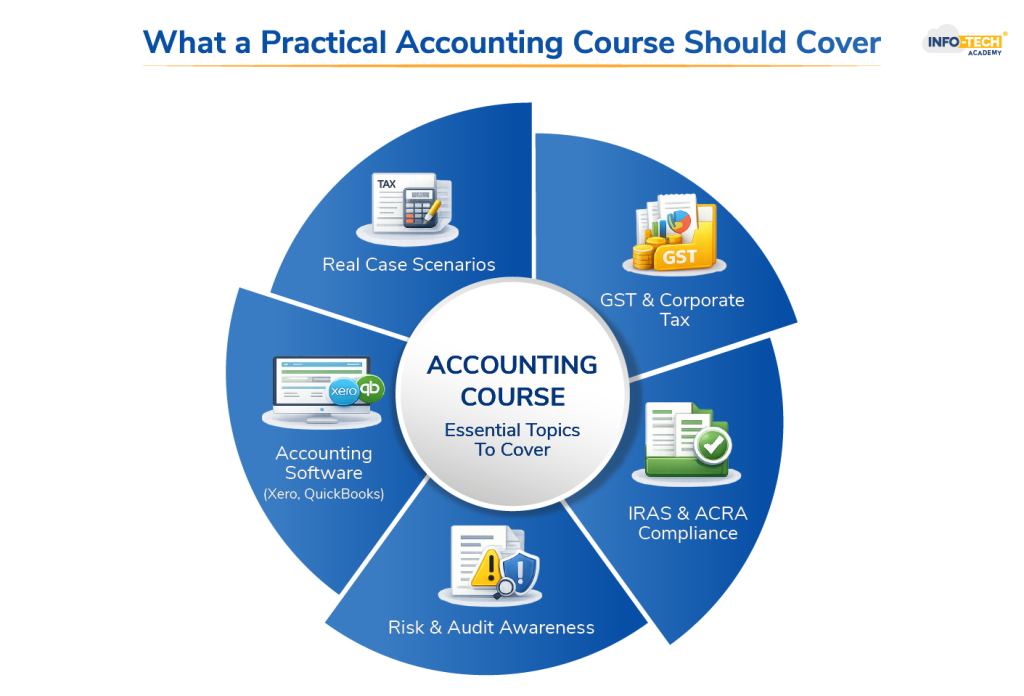
A solid Accounting Course should cover:
1. Singapore Tax Requirements in Practice
Not just what GST or corporate tax is—but how it applies in real transactions and filings.
2. IRAS and ACRA Expectations
Understanding what needs to be submitted, when, and how to avoid common issues.
3. Real Case Scenarios
Working through situations like:
- Fixing GST errors
- Reviewing expense claims
- Preparing for possible audits
4. Familiarity with Accounting Software
Most companies rely on tools like Xero or QuickBooks. Knowing how these systems work is part of the job now.
5. Awareness of Risks
Recognising what might trigger questions—and how to avoid getting there in the first place.
The Shift from Accountant to Compliance Strategist
The role of an accountant has changed quite a bit over the years.
It’s no longer just about recording transactions and preparing reports.
Today, professionals are expected to:
- Spot potential compliance issues early
- Support decision-making with accurate data
- Understand the tax impact of business activities
- Keep systems and records aligned
In many ways, the role is becoming more proactive than reactive.
Those who take the time to build these skills—often through a well-structured Accounting Course—tend to move into more trusted and strategic positions.
Who Should Seriously Consider This Training?
You don’t have to be an accountant to benefit from understanding compliance.
This kind of training is useful for:
- Finance professionals who want to stay current
- Business owners managing their own accounts
- HRMS teams handling payroll and statutory contributions
- Anyone planning to move into a finance-related role
Because in practice, compliance touches more than just the finance department.
The Bottom Line: Compliance Is a Skill, Not a Checklist
Singapore’s system works well—but it expects you to keep up.
Compliance isn’t something you handle once and forget. It’s built into how a business runs, day to day.
And while experience helps, structured learning still plays a big role. A practical WSQ approved Accounting Course gives you a clearer understanding of what’s expected—and how to handle it without second-guessing every step.
Frequently Asked Questions:
Why is accounting compliance becoming more demanding in Singapore?
Because systems are more connected and data-driven, errors are easier to detect. Businesses are expected to maintain accurate records throughout the year, not just during tax season.
Do non-accountants need an Accounting Course?
In many cases, yes. Business owners, managers, and HR professionals often deal with financial data and compliance matters, so having a working understanding reduces risk.
What should I look for in an Accounting Course?
Focus on courses that include real examples, GST handling, tax filing processes, and exposure to accounting software—not just theory.
What happens if a company fails to stay compliant?
It can lead to penalties, increased scrutiny, and operational challenges. Over time, it can also affect trust with partners and regulators.

I’ve always been drawn to the power of writing! As a content writer, I love the challenge of finding the right words to capture the essence of HR, payroll, and accounting software. I enjoy breaking down complex concepts, making technical information easy to understand, and helping businesses see the real impact of the right tools.