


In this article
- 1. What Is An AI Chatbot And Why Is Everyone Suddenly Talking About It?
- 2. What Is An AI Chatbot?
- 3. How Do AI Chatbots Actually Work?
- 4. Why Are AI Chatbots Suddenly Everywhere?
- 5. Are AI Chatbots Replacing Human Conversations?
- 6. Why Do Some AI Chatbots Feel Surprisingly Human?
- 7. What Are The Biggest Benefits Of Using An AI Chatbot?
- 8. What Are The Problems With AI Chatbots?
- 9. Will AI Chatbots Become Even More Advanced?
- 10. AI Chatbot FAQs
What Is An AI Chatbot And Why Is Everyone Suddenly Talking About It?
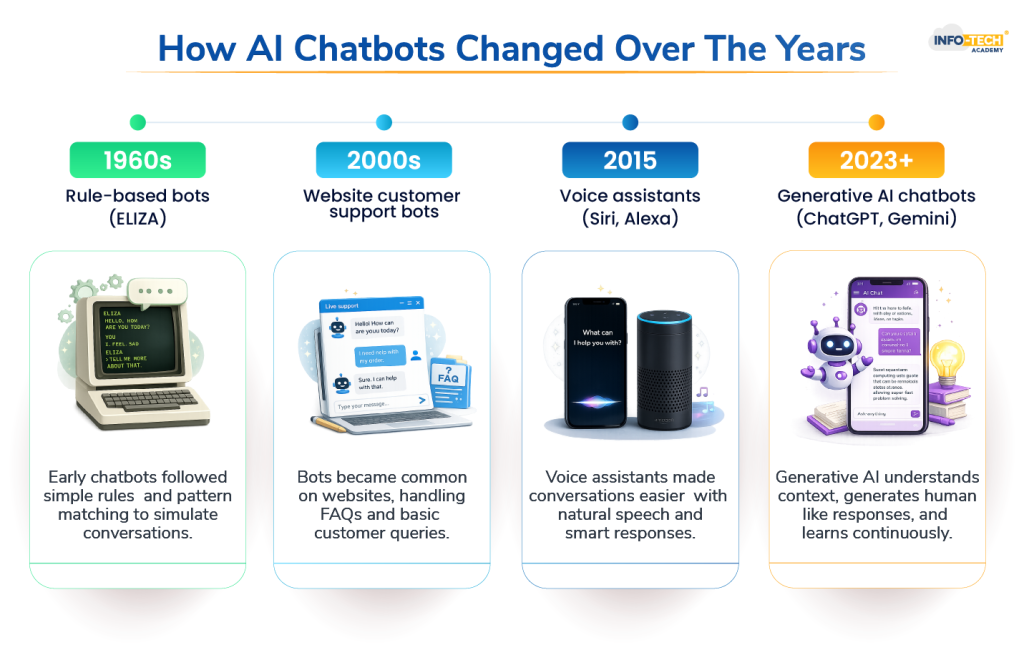
A few years ago, talking to a chatbot felt frustrating. You would type a question, get a robotic answer, and instantly know you were speaking to software. Most conversations felt stiff, repetitive, and unnatural. Today, that experience has completely changed.
Now people casually ask ChatGPT for ideas, talk to Alexa while cooking dinner, message customer support bots late at night, or use AI assistants to draft emails and solve problems. Somewhere along the way, AI chatbots stopped feeling like a futuristic experiment and quietly became part of everyday life.
But here’s the interesting part — most people use AI chatbots daily without fully understanding what they actually are or why they’ve become so powerful so quickly.
An AI Chatbot is more than just a support tool sitting in the corner of a website. It is rapidly changing the way humans interact with technology itself.
What Is An AI Chatbot?
An AI chatbot is a software program designed to have conversations with people in a natural way. Instead of simply giving pre-written replies, it tries to understand what a person actually means and responds like a real conversation would.
That’s the biggest difference.
Older chat systems could only react to exact commands. If you typed something unexpected, the conversation would usually break. Modern AI chatbots are different because they can understand questions written in everyday language.
For example, if someone types:
“I can’t log into my account and I’m getting frustrated.”
A traditional bot might only detect the words “log in” and send a password reset link.
An AI chatbot understands the situation better. It recognizes frustration, understands the problem, and responds in a more natural and helpful way.
That human-like interaction is exactly why AI chatbots are becoming so common across websites, apps, businesses, and even classrooms.
How Do AI Chatbots Actually Work?
Most people imagine AI chatbots as machines that magically “know everything.” In reality, they work by studying huge amounts of language patterns and learning how humans communicate.
When you ask a question, the chatbot quickly analyzes:
- What you are asking,
- The context of the conversation,
- The meaning behind your words,
- & the kind of response that would make sense naturally.
It then generates a reply almost instantly.
The reason modern AI chatbot systems feel so smooth is because they are designed to mimic human conversation patterns rather than follow rigid scripts.
That’s why you can type:
- Short questions,
- Incomplete sentences,
- Slang,
- Spelling mistakes,
- Or even emotional messages,
and the chatbot can still understand you surprisingly well.
It’s less like searching a database and more like having a conversation.
Why Are AI Chatbots Suddenly Everywhere?
The short answer is simple: people want faster communication.
Nobody enjoys waiting on hold for customer support anymore. People don’t want to search through endless FAQ pages just to find one answer. They want immediate help, immediate recommendations, and immediate responses.
AI chatbots solve that problem.
Businesses realized that customers prefer quick conversations over complicated systems. Instead of clicking through ten pages, users can simply ask:
“Where’s my order?”
“Can I reschedule my appointment?”
“Which laptop is best for video editing?”
And the chatbot responds instantly.
But AI chatbots are no longer limited to customer service.
Students use them for studying. Writers use them for brainstorming. Employees use them to simplify work. Online stores use them to guide buyers. Healthcare providers use them to answer patient questions.
In many ways, the AI chatbot has become a new digital assistant for modern life.
Are AI Chatbots Replacing Human Conversations?
Not exactly — but they are changing how communication works online.
The reality is that many conversations people have every day are repetitive. Questions about delivery times, password resets, appointment bookings, opening hours, or basic troubleshooting happen thousands of times daily in businesses around the world.
AI chatbots are extremely good at handling those repetitive interactions quickly.
But when situations become emotional, sensitive, or complex, people still prefer speaking to humans. A chatbot may answer questions efficiently, but it cannot genuinely understand human experiences the way another person can.
That’s why the smartest companies are not replacing humans entirely. They are using AI chatbots to handle routine communication while human teams focus on situations that require empathy, judgment, and deeper thinking.
The future is not about humans disappearing. It’s about humans spending less time on repetitive tasks.
Why Do Some AI Chatbots Feel Surprisingly Human?
This is the part many people find fascinating.
Modern AI chatbots are trained using massive amounts of human conversations, writing styles, questions, and language structures. Because of that, they learn how humans naturally speak.
They understand tone better than older systems ever could.
For example, if someone says:
“I’m really confused about this,”
the chatbot understands that the person may need a simpler explanation.
If someone sounds angry or impatient, some AI chatbots adjust their tone to sound calmer and more supportive.
That ability makes conversations feel more natural, even though there’s no real human on the other side.
And honestly, that’s why AI chatbots sometimes feel unsettlingly real.
What Are The Biggest Benefits Of Using An AI Chatbot?
One reason businesses are investing heavily in AI chatbots is because they solve several problems at once.
They work 24 hours a day without breaks. They can talk to thousands of people simultaneously. They respond instantly. And they reduce pressure on customer support teams.
For users, the biggest advantage is convenience.
People no longer need to:
- Wait in queues,
- Send emails for simple questions,
- Or search endlessly for information.
They can just ask.
That simplicity is powerful.
And because AI chatbot systems improve over time, conversations often become smoother and more accurate the longer they are used.
What Are The Problems With AI Chatbots?
Despite all the excitement, AI chatbots are far from perfect.
Sometimes they give incorrect answers confidently. Sometimes they misunderstand context completely. And sometimes they sound helpful while actually providing inaccurate information.
That’s one of the biggest concerns surrounding AI chatbot technology today.
Another issue is privacy.
Since chatbots process conversations and user data, businesses have to be extremely careful about how information is stored and protected.
There’s also a growing concern about people becoming too dependent on AI-generated answers without questioning accuracy.
An AI chatbot can assist people, but it should not replace critical thinking.
Will AI Chatbots Become Even More Advanced?
Almost certainly.
Right now, most people use AI chatbots mainly for writing, answering questions, or customer support. But the technology is evolving incredibly fast.
In the near future, AI chatbots may:
- Manage schedules,
- Handle online purchases,
- Organize workflows,
- Assist doctors,
- Tutor students personally,
- & even operate software on behalf of users.
The bigger shift, though, is not just technological.
It’s behavioral.
People are becoming increasingly comfortable talking to machines conversationally. That alone is changing how websites, apps, and businesses are being designed.
Instead of navigating systems manually, users now expect technology to simply understand them.
Final Thoughts
The phrase AI Chatbot sounds simple on the surface, but the technology behind it is reshaping digital communication in ways most people still underestimate.
We are moving toward a world where conversations become the main way humans interact with technology. Instead of clicking through menus or learning complicated systems, people increasingly just ask questions naturally.
And AI chatbots are becoming the bridge between humans and the digital world.
Some will help businesses grow. Some will simplify daily life. Some will save people time. And some may completely change industries over the next few years.
But one thing is already clear:
AI chatbots are no longer a passing trend. They are becoming part of how modern society communicates.
AI Chatbot FAQs:
What is an AI chatbot in simple terms?
An AI chatbot is a computer program that can talk to people naturally through text or voice. Unlike traditional bots, it understands questions, context, and conversation flow to provide more human-like responses.
How does an AI chatbot work?
An AI chatbot works by analyzing what a user says, understanding the meaning behind the message, and generating a relevant response. It learns from language patterns and conversations to improve interactions over time.
What is the difference between a chatbot and an AI chatbot?
A regular chatbot follows fixed rules and scripted replies, while an AI chatbot can understand natural language, handle different types of questions, and respond more conversationally without depending only on pre-written answers.
Where are AI chatbots commonly used?
AI chatbots are used in customer service, online shopping, healthcare, banking, education, HR, and business support. Many websites and apps now use AI chatbots to answer questions instantly and improve user experience.

I’ve always been drawn to the power of writing! As a content writer, I love the challenge of finding the right words to capture the essence of HR, payroll, and accounting software. I enjoy breaking down complex concepts, making technical information easy to understand, and helping businesses see the real impact of the right tools.